
Maker · silver
Hester Bateman
The widow who took over her husband's workshop in 1761 and turned it into the most prolific family business in Georgian silver. Her script HB is one of the most recognised marks in the field.
- Mark
- HB in script
- Active
- 1761 to 1790
- Place
- London
- Typical range
- £80 for spoons and tongs to £3,000 for good hollowware
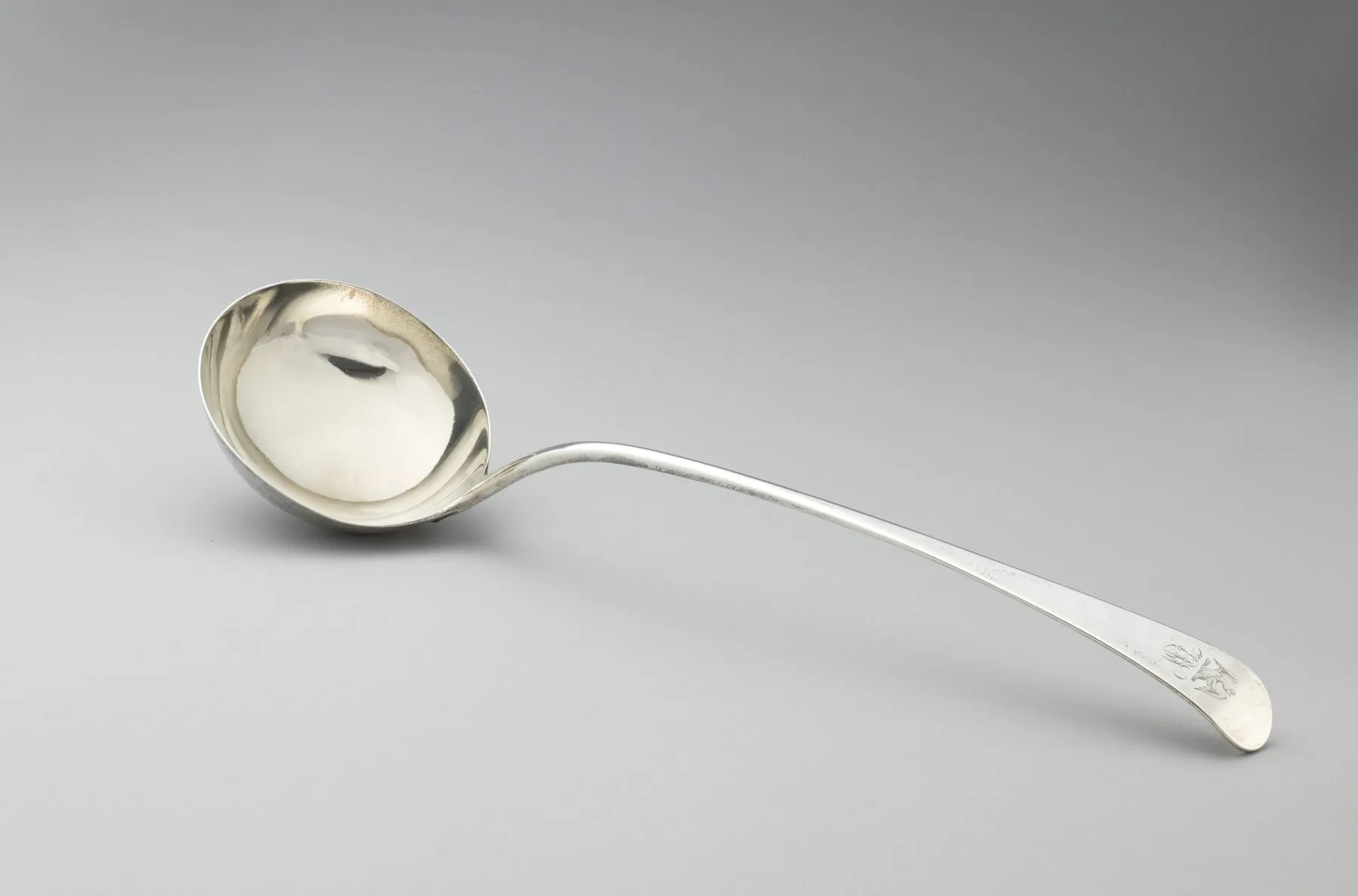
The Metropolitan Museum of Art, open access
Hester Bateman registered her mark in 1761, a year after the death of her husband John, a gold chain maker. Working with her sons Peter and Jonathan, and later Jonathan’s widow Ann and her son William, she built a workshop that supplied the London trade with well-made, lightly decorated domestic silver until she retired in 1790. The business continued under Peter, Ann and William Bateman into the 1840s.
What to look for
Her mark is HB in script within a shaped punch. Later marks read PB over AB, PB over WB, and WB alone. The house style is restrained neoclassical: bright-cut engraving, beaded borders, pierced galleries and slender forms in thin gauge silver, which suited the price-conscious middle market of the day.
What moves the price
Hollowware is scarce compared with flatware, so a teapot, a coffee pot or a pair of sauce boats commands the money. Bright-cut engraving in crisp condition matters, since it wears easily on thin metal. Tongs, spoons and small pieces are plentiful and sell by the dozen. A named armorial, a documented provenance or a matching pair lifts the estimate. Beware of later “improvements”, especially added chasing on plain pieces, which reduce value rather than add to it.
Sale prices
Bateman at auction.
Hammer, excluding premium.
| Date | Object | Saleroom | Estimate | Hammer |
|---|---|---|---|---|
| 22 May 2026 | Hester Bateman sugar tongs, London 1786 Lot 204 | London | £80 to £120 | £110 |