Two numbers
Every piece of solid silver has a scrap silver value: its weight, multiplied by its fineness, multiplied by the price of silver that day, less a refiner’s margin. It is the floor. Nothing sells for less, because a refiner will always pay it.
Some pieces also have an auction value, which is what a buyer pays for the object rather than the metal. For a Paul Storr jug it is twenty times the scrap value. For a plain twentieth-century sugar bowl it is the same number. The job is to find out which kind of piece you have.
Step one: weigh it
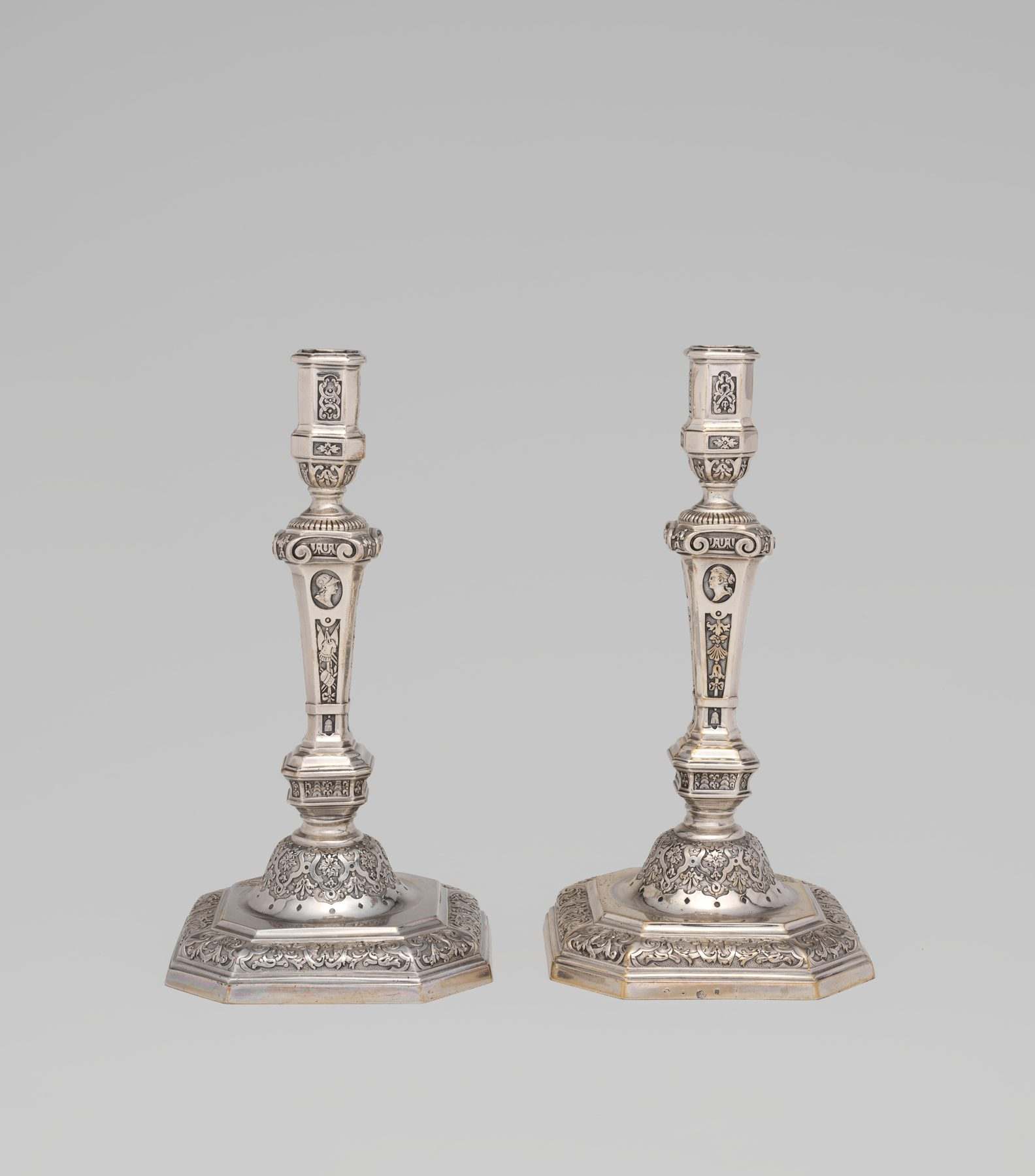
Use a kitchen scale in grams. Take off anything that is not silver: wooden or ivory handles, glass liners, and above all the pitch or plaster that fills “loaded” candlesticks and the bases of some trophies. A loaded candlestick that weighs 400 grams contains 80 grams of silver. Put the figure into the scrap calculator and you have the floor.
Step two: read the marks
The hallmarks guide covers this. What you want from the marks is the date and the maker. Pre-1830 raises the ceiling. A maker with a page in the register raises it further. A London or Edinburgh mark on an early piece raises it again.
Step three: look at the object
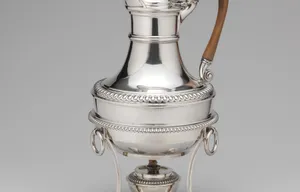
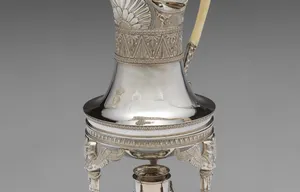
Some forms are collected for themselves and some are not.
| Sells for the object | Sells for the metal |
|---|---|
| Georgian hollowware: teapots, coffee pots, sauce boats, salvers | Plain twentieth-century hollowware without a maker |
| Card cases, vinaigrettes, snuff boxes, vestas | Odd modern spoons and forks |
| Complete canteens by a known maker | Incomplete or mixed canteens |
| Arts and Crafts and Art Nouveau pieces | Presentation trophies with engraved dedications |
| Early spoons: apostle, seal-top, trefid | Pieces with monograms removed |
Step four: check the records
Search the price records for the same object type. If comparable pieces have hammered at three times the scrap value or more, the auction route pays. If they hover at melt, remember that the auction house charges the seller commission and takes weeks to pay, while the refiner pays on the day. Below about £150 in scrap value, the refiner is the better route for most plain pieces.
What not to do
Do not polish heavily before selling. Do not remove a crest or monogram. Do not split a set. Do not accept a scrap price for anything with a good maker, a pre-1830 date or a collected form without asking a saleroom first, which costs nothing. The auctions guide explains what the saleroom will charge if you do consign.