The general rule
Open to the copyright page, on the back of the title page. Look for a number line, a statement of printing history, or a date. The edition and printing guide explains what each means. What follows is the publisher-specific detail that the general rule leaves out.
British publishers
Faber and Faber. “First published in [year]” with no further printings listed. Reprints add “Reprinted [year]”. Modern Faber uses a number line.
Jonathan Cape. “First published [year]” on the copyright page. Ian Fleming’s Bond novels are the reason Cape firsts matter, and the jackets matter more than the books.
Bloomsbury. Number line, with 1 present on a first printing. The 1997 Philosopher’s Stone reads 10 9 8 7 6 5 4 3 2 1.
Chatto and Windus, Secker and Warburg, Heinemann. “First published [year]” and nothing after it. Heinemann’s Graham Greene firsts are the most traded.
Collins Crime Club. Agatha Christie’s publisher from 1926. First printings state the year on the title page and carry no reprint statement. Jackets are scarce and carry most of the value.
Penguin. Paperback firsts of the 1930s and 1940s are collected by number. The date on the copyright page and the absence of “Reprinted” identify a first printing.
American publishers
Scribner’s. From 1930 an “A” on the copyright page marked a first printing. Before that, a seal and a date match.
Random House, Knopf, Viking, Harper. “First Edition” or “First Printing” stated, and removed on reprints. Knopf adds “First Edition” beneath the copyright line. From the 1970s most use number lines.
Doubleday. “First Edition” stated on the copyright page and removed on reprints, with exceptions that the reference guides list.
Little, Brown. Date match on title and copyright pages before the 1970s, then number lines.
Before 1900
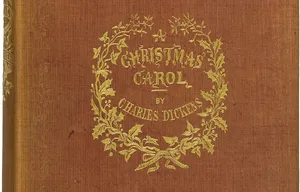
Victorian and earlier books rarely state the printing. The identifiers are the date on the title page, the publisher’s advertisements bound at the back and their dates, the binding cloth and its stamping, and the points recorded in the author bibliographies. Dickens in parts, Trollope in three volumes and the Brontës under their pseudonyms all have well-documented first issues and well-documented traps.
The three reference books worth owning
McBride’s Points of Issue and A Pocket Guide to the Identification of First Editions cover publisher conventions in a few pages each. Ahearn’s Collected Books: The Guide to Values lists points and prices by author. Between them they answer most questions for under £60.
When a first printing is not enough
A first printing in a torn jacket, or with a previous owner’s inscription, or from a book club, sells for a fraction of a clean copy. Identification is the first half of the job. The value guide covers the rest, and the price records show what clean copies make.